How to Style Men's Jogger Sweatpants for Work, Gym, and Casual Weekend Outfits
I've spent over a decade working in the jogger sweatpants industry, from design floors to fit-testing rooms, and if there's one thing I've learned, it's this: the jogger stopped being "just gym wear" years ago. The problem isn't the pant. The problem is how most guys wear it. I've seen guys roll into a business-casual office looking sharp in joggers, and I've seen guys look sloppy at a coffee shop in the exact same pair. So let me walk you through how I'd actually style jogger sweatpants for three distinct settings — work, gym, and weekend — based on what I've seen work (and fail) in real life.
Why Joggers Became Acceptable Everywhere
Quick context first. The modern jogger — tapered leg, elastic cuff, drawstring waist — evolved from classic track pants. But somewhere around the mid-2010s, fabric technology caught up with the silhouette. We started using ponte knits, brushed cotton blends, and even woven stretch fabrics that hold a crease-like structure. That shift is what made joggers office-eligible. If the fabric looks like a sweatpant, it's a sweatpant. If it looks like a trouser with an ankle cuff, it's a styling piece.

Styling Joggers for Work: The Hard One
Choose the Right Fabric First
I tell every guy the same thing: your work jogger should never feel fluffy. Look for ponte, French terry with a tight loop, or a nylon-cotton twill blend. Dark colors — charcoal, navy, black, olive — read as trousers from across a room. I once watched a colleague wear grey heather joggers to a client pitch with a tucked-in oxford shirt and Chelsea boots, and honestly, nobody blinked. But that only worked because the pant was structured.
Build the Outfit Around Structure
For men's jogger work outfits, my go-to formula is simple: tapered jogger + tucked button-down or fine-knit sweater + leather sneakers, loafers, or Chelsea boots. Tucking is non-negotiable in my opinion — the drawstring waist needs to be hidden under a belt-line-clean top or a slim sweater. Add an unstructured blazer if your office leans business casual, and you'd be surprised how elevated the whole look gets. Avoid hoodies at work. That combo screams laundry day, not Monday meeting.

Styling Joggers for the Gym: Function Leads
Prioritize Fabric Performance Over Looks
At the gym, flip your priorities. Here I care about moisture-wicking polyester blends, four-way stretch, and gusseted crotches for squat depth. Cotton joggers soak up sweat and get heavy — I learned that the hard way years ago training in a pair of 100% cotton fleece joggers. Miserable. Performance joggers with mesh panels or zip pockets for your phone and keys are what I'd recommend to anyone serious about training.
Keep the Fit Athletic, Not Baggy
A tapered athletic jogger should sit close through the thigh with a bit of room to move, and the cuff should hit right at or just above the ankle bone. If the cuff pools on your shoe, the leg opening will catch on your sneaker mid-lunge. Pair them with a fitted performance tee or a lightweight hoodie, and you're set. For gym style, matching tonal sets — jogger and top in the same color family — look intentional without trying too hard.

Styling Joggers for Casual Weekends: The Fun One
Weekend Outfits Are About Balance
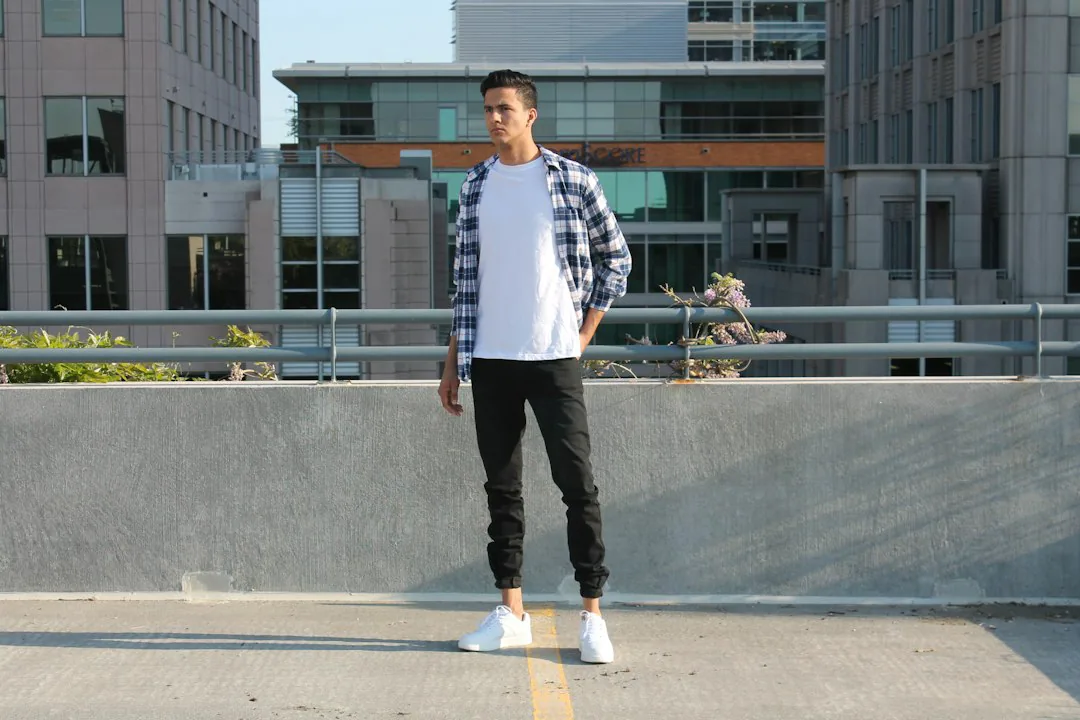
This is where joggers live most naturally. My favorite casual weekend jogger looks play with contrast: relaxed grey joggers with a crisp white t-shirt and a denim or bomber jacket, finished with clean white sneakers. That outfit has carried me through countless Saturday errands and brunches. Another one I love for fall: olive cargo joggers, cream knit sweater, and suede chukka boots. The mix of a dressed-up top with a relaxed bottom is the whole trick.
Play With Layers and Textures
Weekend styling is where you can bring in texture. A chunky cable-knit sweater over slim joggers creates an intentional high-low mix. Crewnecks, overshirts, even a casual field jacket — they all work. Just keep one rule in mind: if your jogpers are loose and baggy up top, keep the top layer fitted, and vice versa. Two oversized pieces together and you lose the shape entirely.

Common Mistakes I See All the Time
After years in this industry, here are the errors I see most. First, wrong cuff placement — too long looks sloppy, too short looks cropped unless that's intentional. Second, wearing wrinkled joggers; even knit fabrics crease, and a quick steam fixes it instantly. Third, mixing gym joggers with office outfits. The performance fabric's sheen gives it away under office lighting every time. And fourth — and this one's big — sizing up for "comfort" and ending up with droopy knees after two weeks of wear. Buy the correct size. Elastic stretches with use; it doesn't shrink back.
Final Thoughts
Joggers are arguably the most versatile pant a man can own right now, but versatility comes from owning the right two or three pairs, not one pair doing triple duty. If I were building a rotation from scratch today, I'd get one dark structured pair for work-appropriate outfits, one technical pair for gym wear, and one relaxed cotton pair for weekends. Master those three, and you'll never look at jogger sweatpants the same way again.
参考链接
- Men's Jogger Pants Styling Guide for Smart Casual Looks
- Best Performance Joggers for Gym and Training Workouts
- How to Choose the Right Fabric for Men's Sweatpants
- Athleisure Outfit Ideas: Wearing Joggers Beyond the Gym
- Jogger Fit Guide: Finding the Right Length and Cuff Placement